
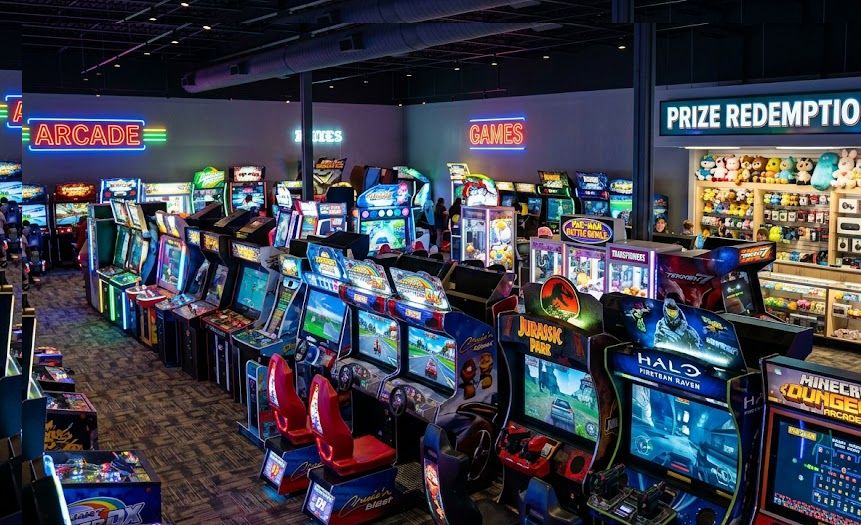
Opening an arcade typically costs between $100,000 and $600,000. A compact card-based arcade with 20 to 30 games in a leased retail space sits near the low end, while a full family entertainment center with 50 or more games, a redemption counter, and a party room pushes toward the high end and beyond. The games themselves are the budget. Nearly everything else, from the card system to the build-out, is small next to the cost of filling the floor, which is why the smartest planning starts with the game list.
What Arcade Games Cost
New commercial arcade games generally run $3,000 to $15,000 each, and the marquee pieces that anchor a floor, such as racing cabinets, VR attractions, and large crane or prize games, commonly cost $10,000 to $30,000 or more. A typical neighborhood arcade operates 20 to 50 games, which puts a fully new floor anywhere from $150,000 to $500,000 on games alone.
Two strategies bring that number down. The used market is deep, since venues rotate games constantly, and pre-owned cabinets often sell for 30 to 60 percent less than new. The other route is revenue sharing with an amusement route operator, who places and maintains games in exchange for a split of the earnings, often around half. That trades margin for a dramatically smaller opening check, and plenty of arcades open with a mix: owned anchor games plus a routed section.
Ready to get started?
The Rest of the Budget
Modern arcades run on card systems rather than quarters, and a debit card system with readers on every game plus kiosks typically costs $15,000 to $50,000 depending on floor size. A redemption counter adds display fixtures and a rotating prize inventory. Build-out is lighter than most entertainment concepts, since arcades need power, flooring, lighting, and signage rather than plumbing-heavy construction, and many operators open in second-generation retail space for $30,000 to $100,000. Add a point-of-sale system, insurance, and a working capital reserve for the first slow months.
Are Arcades Profitable?
They can be, and the economics favor patient owners. Once a game is paid for, each additional play costs almost nothing to serve, so profitability turns on traffic and how much of the floor stays busy. Redemption games, birthday parties, and light food and beverage are where established arcades build margin on top of gameplay.
The category is substantial. The U.S. arcade, food and entertainment complexes industry generates about $6 billion a year across more than 6,000 businesses, ranging from single-room arcades to national chains, with Dave & Buster’s the largest operator. There is room in that spread for a well-located independent, because the product is fundamentally local: families go to the arcade that is ten minutes away.
Pricing runs through the card system, with individual games costing the equivalent of fifty cents to a couple of dollars per play and most revenue arriving as card reloads of $10 to $30 at the kiosk. Birthday party packages, which bundle game credits with a reserved table and food, routinely become the largest single revenue line for neighborhood arcades, because they book the weekend morning hours that walk-in traffic leaves empty and they introduce a steady stream of new families to the venue. A modest snack counter rounds out the model, adding margin without the burden of a full kitchen.
How Owners Finance the Floor
Arcade games are exactly the kind of asset lenders like, because each cabinet has a resale market and a serial number. Equipment financing lets an owner spread game costs over several years with the games themselves serving as collateral, and it applies to pre-owned cabinets as well. Our guide to equipment financing for used equipment covers how lenders handle age limits and valuations on used gear. For the opening months, a business line of credit covers payroll, prizes, and marketing while the location builds its regulars, with interest owed only on what you draw.
Imagine an owner opening a 30-game arcade at $220,000 all-in. Financing $140,000 of games over five years and holding cash for build-out and reserve turns the project from a savings-account problem into a monthly payment the card readers can cover.
Finance Your Arcade with Delta Capital Group
Delta Capital Group provides unsecured working capital from $5,000 to $5,000,000 to business owners across the country. No collateral required beyond the equipment for most equipment financing. Approvals happen in as little as 24 hours, and 95 percent of approved applicants are funded within 48 hours. Minimum qualifications are 6 months in business, $15,000 in monthly revenue, and a 500 credit score. Apply at deltacapitalgroup.com.
Frequently Asked Questions
How much does it cost to start a small arcade?
A compact arcade with 20 to 30 games in leased retail space typically costs $100,000 to $250,000, with the games representing most of the budget. Buying used cabinets or revenue-sharing part of the floor with a route operator can bring the opening cost down substantially.
How much do arcade games cost each?
New commercial games generally run $3,000 to $15,000, while large anchor attractions like VR setups, racing cabinets, and big crane games can cost $10,000 to $30,000 or more. Used cabinets commonly sell for 30 to 60 percent less than new.
Is it better to buy arcade games or revenue share?
Buying keeps the full earnings of every game but requires the capital upfront. Revenue sharing with a route operator eliminates most of the equipment cost in exchange for a split of the income, often around half. Many arcades blend the two, owning their best earners and routing the rest.
How many games does an arcade need?
Most viable neighborhood arcades run 20 to 50 games, with enough variety to serve young kids, teens, and adults in the same visit. Redemption games deserve heavy representation, since prize play drives repeat visits and card reloads.
Can you finance arcade games?
Yes. Arcade cabinets qualify for equipment financing with the games serving as their own collateral, and both new and used equipment can be financed. Owners typically pair equipment financing with a line of credit for opening and operating costs.

