
Yes, you can get equipment financing for used equipment, and the loan terms are usually only slightly different from financing for new equipment. Most alternative lenders and equipment finance companies accept used equipment up to a certain age (typically 10 to 15 years old at the end of the loan term), with the loan amount usually capped at 80 to 90 percent of the equipment’s fair market value.
The exact terms depend on the equipment type, the condition, whether you’re buying from a dealer or a private seller, and the lender’s specific guidelines. The application process is comparable to new equipment financing in most ways.
Standard Age and Condition Requirements
Most equipment lenders use a “useful life” framework when evaluating used equipment. The equipment must have enough remaining useful life to outlast the loan term, with a margin of safety. For a 5-year loan on a piece of construction equipment with a 20-year useful life, equipment that’s 10 years old (with 10 years of life remaining) usually qualifies. Equipment that’s 18 years old (with only 2 years of life remaining) usually doesn’t.
The SBA’s 504 loan program, which is a common option for larger equipment purchases, requires machinery and equipment to have a useful remaining life of at least 10 years. Private alternative lenders are sometimes more flexible, accepting 5 to 7 years of remaining life depending on the equipment category.
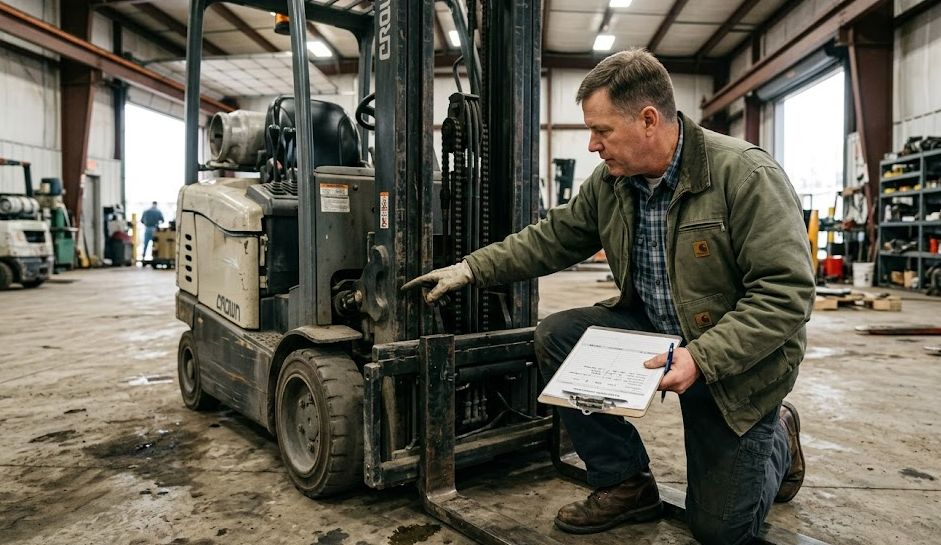
Condition matters as much as age. A 12-year-old commercial truck that’s been well-maintained and has documented service records is usually financeable. The same truck with no service history, evidence of accident damage, or unusual wear typically isn’t. Lenders may require a professional inspection or appraisal before approving used equipment, especially for higher-value purchases.
| Feature | Unsecured | Secured |
|---|---|---|
| Collateral | None | Required |
| Approval Speed | 24-48 hrs | 2-4 weeks |
| Credit Score | 500+ | 650+ |
Dealer vs Private Seller: How Financing Differs
Equipment financing companies generally prefer dealer purchases over private sales. There are practical reasons for this preference.
Dealer transactions come with standardized invoicing, clear title transfer procedures, and warranty options the lender can verify. The dealer takes the lender’s payment directly, transfers the equipment with proper documentation, and stands behind the condition through manufacturer or dealer warranties. Underwriting is faster, and approvals are higher.
Private seller transactions require more work. The lender has to verify the seller actually owns the equipment, confirm there are no liens, handle the title transfer, and protect against fraud. Many alternative lenders will finance private sales, but at slightly higher rates or with a lower loan-to-value ratio. Some require the equipment to be inspected by a third party before funding.
If you’re considering a private sale, expect:
- A more thorough verification process
- A potential title and lien search through the equipment’s home state
- Direct funding to the seller after verification, not to you
- Possibly a higher down payment requirement (15 to 25 percent versus the 10 to 15 percent typical for dealer purchases)
Loan Amounts and Terms for Used Equipment
The financed amount is usually based on the equipment’s fair market value rather than the purchase price, though for arm’s length transactions, the two are typically close.
For new equipment, lenders often finance 100 percent of the invoice price, including freight and installation. For used equipment, financing is typically capped at 80 to 90 percent of the fair market value. The borrower covers the difference as a down payment.
Loan terms tend to be shorter than those for new equipment financing. A new commercial truck might be financed over 60 to 72 months. A 10-year-old version of the same truck might finance over 36 to 48 months. The shortened term reflects the equipment’s reduced remaining useful life.
Interest rates on used equipment financing are usually 1 to 3 percentage points higher than those on new equipment, reflecting the additional risk of older equipment. For borrowers with strong credit, the difference can be smaller. For borrowers with weaker credit or non-prime profiles, used equipment loans may not be available at all without additional collateral or a personal guarantee.
Documentation Lenders Need for Used Equipment
Beyond the standard business and personal financial documents required for any equipment loan, used equipment financing typically requires:
- A bill of sale or purchase agreement with the seller’s full identifying information
- The equipment’s VIN, serial number, or model identification
- Recent inspection reports or maintenance records
- A copy of the title (where applicable, like vehicles and heavy equipment)
- For private sales, a lien search confirming a clear title
- Photos of the equipment, often including the data plate or serial number
For specialty equipment such as medical, manufacturing, and restaurant, the lender may also ask for the equipment’s original purchase invoice if available, since that helps establish the depreciation schedule.
When Used Equipment Doesn’t Get Approved
A few common reasons why equipment financing applications get declined:
- Equipment too old. If the remaining useful life is less than the loan term, most lenders will pass.
- No clear title. UCC searches that turn up existing liens or title disputes typically stop the deal until resolved.
- Specialty equipment with a limited resale market. Lenders prefer equipment with strong secondary markets so they can recover value if they need to repossess.
- Equipment outside the lender’s program. Some lenders only finance specific categories (construction, transportation, medical). Others avoid certain categories (food trucks, restaurant equipment) due to repossession challenges.
- Combined loan-to-value is too high. If the purchase price exceeds fair market value, the lender will only finance the appraised value, and you will cover the rest.
If used equipment financing doesn’t work for a specific purchase, alternative funding can fill the gap. A working capital loan structured as a short-term business loan or drawn from a business line of credit can cover equipment when traditional equipment financing isn’t available.
Apply for Used Equipment Financing with Delta Capital Group
Delta Capital Group is a direct funder, not a broker, providing unsecured working capital from $5,000 to $5,000,000 to business owners across the country. Our equipment financing solutions cover both new and used equipment for a wide range of industries, with flexible terms designed around the equipment’s useful life and the borrower’s revenue profile. No collateral beyond the equipment itself for most transactions. Approvals happen in as little as 24 hours, and 95 percent of approved applicants are funded within 48 hours. Minimum qualifications are 6 months in business, $15,000 in monthly revenue, and a 500 credit score.
Frequently Asked Questions
What’s the oldest equipment a lender will finance?
Most alternative equipment lenders cap financed equipment at 10 to 15 years old at the start of the loan, with useful remaining life exceeding the loan term. The SBA 504 program requires at least 10 years of remaining useful life. Specialty lenders may have different guidelines.
Can I finance used equipment from a private seller?
Yes, though the process is more involved than dealer financing. Expect title and lien verification, a possible third-party inspection, and direct payment from the lender to the seller rather than to you. Down payment requirements are typically higher for private sales.
Do I need a down payment for used equipment financing?
Usually yes. Down payments on used equipment typically run 10 to 25 percent of the equipment’s value, depending on the lender, the equipment age, and your credit profile. Some lenders offer 0 percent down on used equipment for strong borrowers, but this is less common than with new equipment.
Are interest rates higher for used equipment loans?
Generally, yes, by 1 to 3 percentage points compared to new equipment financing. The exact difference depends on the equipment age, condition, your credit, and the lender. Strong credit profiles see smaller premiums; non-prime credit can see larger ones.
How long does used equipment financing take to approve?
Standard timelines run 24 to 72 hours from a complete application to approval for alternative lenders. Bank-backed equipment loans take longer (1 to 3 weeks). SBA-backed equipment loans typically take 30 to 90 days. Private sales add additional verification time on top of the lender’s baseline.
Can I refinance used equipment I already own?
Yes, equipment refinancing is a separate product. If you’ve owned the equipment for some time, paid down (or paid off) the original financing, and have positive equity, you can refinance to access equity or restructure the payment. The same age and condition rules apply.

