
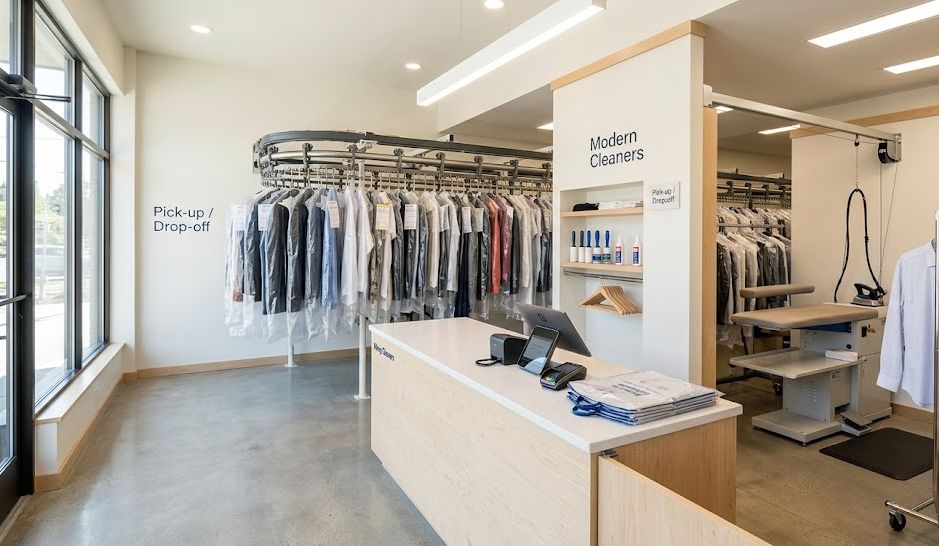
Opening a dry cleaners typically costs between $200,000 and $500,000 for a full-service plant with on-site cleaning equipment, or $50,000 to $120,000 for a drop store that sends garments to a wholesale cleaner.
The two biggest variables are equipment and buildout. A commercial dry cleaning machine alone runs $50,000 to $90,000 new, and plumbing, ventilation, and electrical work for a plant can match that figure. Add pressing equipment, a boiler, permits, and several months of working capital, and the budget takes shape quickly.
Here’s where the money actually goes, and where owners can trim it.
Dry Cleaning Startup Costs at a Glance
A full-plant dry cleaners is an equipment-heavy build. Typical ranges look like this:
| Expense | Typical Range |
| Lease deposits and buildout | $50,000 to $150,000 |
| Dry cleaning machine | $50,000 to $90,000 |
| Pressing and finishing equipment | $15,000 to $40,000 |
| Boiler and air compressor | $15,000 to $40,000 |
| Garment conveyor | $5,000 to $15,000 |
| POS, tagging, and software | $3,000 to $10,000 |
| Permits and environmental compliance | $5,000 to $25,000 |
| Initial supplies | $3,000 to $8,000 |
| Working capital (3 to 6 months) | $30,000 to $80,000 |
Totals land between roughly $180,000 and $460,000 for most new plants, with high-rent markets and premium equipment pushing past $500,000.
Budget for operating costs from day one as well. Rent typically claims 10 to 15 percent of revenue and labor 30 to 35 percent, with solvent, supplies, and utilities adding several thousand dollars a month for a working plant. New stores rarely break even in their first few months, which is why the working capital line above deserves as much respect as the equipment line.
- ✓6+ months in business
- ✓$15,000+ monthly revenue
- ✓Active business bank account
Full Plant vs Drop Store: The Biggest Cost Decision
Not every dry cleaners cleans on site, and the choice changes your budget by an order of magnitude.
A full plant owns the machines and does the work in house. It costs the most to open but keeps the entire margin on every garment and can take wholesale work from other stores.
A drop store is a counter, racks, a POS system, and a relationship with a wholesale plant that does the actual cleaning. Startup costs commonly run $50,000 to $120,000, since there’s no machine, boiler, or industrial buildout. The trade-off is margin: the wholesale plant takes its cut of every order, and your location lives or dies on convenience and foot traffic.
Many successful operators start with a drop store, build a customer base, and add a plant later once volume justifies the equipment.
The Solvent Decision
Equipment cost depends partly on which cleaning process you choose, and regulation is steering that choice. Perchloroethylene, the traditional solvent, has been phased out in several states, with California banning its use in dry cleaning. New machines built for hydrocarbon and other alternative solvents, along with professional wet cleaning systems, dominate new installations. Expect alternative-solvent machines at the middle to upper end of the equipment range, and budget for the permits and waste-handling requirements your state and county impose. Confirm local rules before signing a lease, because ventilation and compliance retrofits on the wrong space can quietly add tens of thousands.
What Drives Costs Up or Down
Three levers move the total more than anything else:
- Used equipment. A well-maintained used dry cleaning machine, press, or boiler can cut equipment spending by 30 to 50 percent. Lenders finance used machinery routinely, and our guide to equipment financing for used equipment explains how those deals work.
- Buying an existing dry cleaners. Purchasing an operating store with equipment, staff, and customers in place often costs less than building a plant from zero, and revenue starts on day one.
- Location. Rent, buildout condition, and local permitting vary enormously. A second-generation space that previously housed a cleaners can save serious money on plumbing and ventilation.
Financing a Dry Cleaning Business
The demand side justifies the investment for well-run stores. Dry cleaning is a $9.6 billion industry in 2026, according to IBISWorld, spread across roughly 27,600 businesses, which works out to about $350,000 in average revenue per operator.
Most owners don’t write a single check for the full budget. The equipment, the largest line item, is a natural fit for equipment financing, where the machine itself secures the loan and payments spread over its working life. Working capital, supplies, and the slower early months are better matched to a business line of credit that you draw only as needed. Splitting the financing this way keeps cash in reserve for the surprises every new location produces.
Delta Capital Group Funds Dry Cleaning Businesses Nationwide
Delta Capital Group is a direct funder, not a broker, and provides unsecured working capital from $5,000 to $5,000,000 for dry cleaning businesses across the country. No collateral required. Approvals happen in as little as 24 hours, and 95 percent of approved applicants are funded within 48 hours. Minimum qualifications are 6 months in business, $15,000 in monthly revenue, and a 500 credit score. Apply at deltacapitalgroup.com.
Frequently Asked Questions
How much do dry cleaners make?
Average revenue works out to roughly $350,000 per location, based on IBISWorld’s 2026 industry figures of $9.6 billion across about 27,600 businesses. Individual results vary widely with location, pricing, and whether the store runs its own plant or operates as a drop store.
Is a dry cleaning business profitable?
It can be. Full plants that keep their equipment busy, add wholesale accounts, and control labor costs typically earn the strongest margins. Drop stores earn less per garment but carry far lower overhead, so profitability comes down to volume and rent.
How much does a commercial dry cleaning machine cost?
New alternative-solvent machines generally run $50,000 to $90,000 depending on capacity. Well-maintained used machines can cost 30 to 50 percent less, which is why many first-time owners finance used equipment rather than buying new.
Is it cheaper to buy an existing dry cleaners than to open one?
Often, yes. An established store comes with equipment, a customer base, and immediate revenue, and the total price can undercut the cost of building a new plant. Inspect the equipment’s age and the lease terms carefully, since replacing a worn machine erases the savings.
Can you open a dry cleaners with bad credit?
Traditional bank loans become difficult below a 650 FICO score, but alternative options remain. Equipment financing uses the machinery as collateral, and direct funders approve owners with scores as low as 500 when the business shows 6 months of operating history and $15,000 in monthly revenue.

