
On this page
With equipment financing, you borrow to buy the equipment and you own it from day one. With equipment leasing, you pay to use the equipment for a set term and decide at the end whether to buy it, return it or upgrade. Financing usually costs less over the life of the equipment and makes sense for things you’ll use for years. Leasing usually has lower payments and makes sense for equipment that wears out fast or goes out of date.
The short answer
If the equipment will last longer than the loan and you want to keep it, finance it. If you expect to replace it in a few years, or you want the lowest monthly payment and the option to upgrade, lease it.
How equipment financing works
An equipment loan pays for the equipment, and the equipment itself secures the loan. You make fixed payments over a set term, usually matched to how long the equipment will last. When the loan is paid off, you own it free and clear.
Most lenders finance most or all of the purchase price, though some ask for a down payment. Because the equipment is the collateral, approval is often easier than for an unsecured business loan of the same size. Used equipment can be financed too. See our guide to financing used equipment.
How equipment leasing works
A lease lets you use the equipment for a set term in exchange for monthly payments. The leasing company owns it. What happens at the end depends on the type of lease:
- Fair market value (FMV) lease. Lower payments. At the end you can buy the equipment at what it’s worth then, return it or upgrade to newer equipment.
- $1 buyout lease. Higher payments, but you buy the equipment for $1 at the end. It works a lot like a loan.
- 10% purchase option lease. Somewhere in between. You can buy the equipment for 10% of its original cost at the end.
Side by side comparison
| Equipment financing | Equipment leasing | |
|---|---|---|
| Who owns it | You, from the start | The leasing company, until you buy it out |
| Monthly payment | Usually higher | Usually lower, especially with an FMV lease |
| Total cost | Usually lower if you keep the equipment | Usually higher if you end up buying it |
| Up front cost | Sometimes a down payment | Often first and last payment |
| End of term | You own it | Buy, return or upgrade |
| Maintenance | Your responsibility | Usually yours, sometimes included |
| Best for | Long-lasting equipment you’ll keep | Equipment that wears out or goes out of date |
When to finance
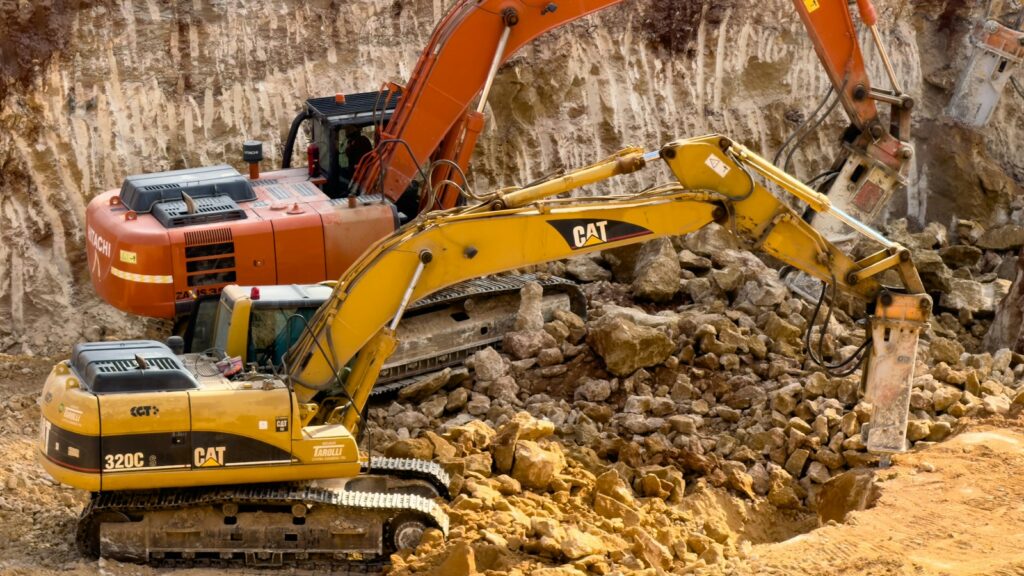
Financing is usually the better choice for equipment that holds its value and will be in service long after the loan is paid off. Think trucks, trailers, excavators, commercial ovens, CNC machines and most heavy equipment. Once the loan is paid, the equipment keeps earning with no payment attached, and it has resale value if you ever sell it.
When to lease
Leasing is usually the better choice for equipment that will be outdated in a few years, like computers, medical and dental technology, POS systems and some diagnostic tools. It also helps when you need to keep monthly payments as low as possible, or you’re not sure you’ll need the equipment long term.
Taxes
Financed equipment and $1 buyout leases are usually treated as a purchase, so you may be able to deduct the cost through depreciation, including Section 179 in many cases. Payments on a true FMV lease are usually deducted as a business expense instead. The rules and limits change, so check with your accountant before you decide based on taxes.
What about a working capital loan?
Equipment financing and leasing both take time to set up because the lender needs an invoice and has to approve the specific equipment. If a machine breaks down and you need it replaced or repaired this week, a short-term loan or merchant cash advance can fund much faster, often the same day you’re approved. It costs more, so it’s best for urgent repairs and smaller purchases. For planned purchases, equipment financing is usually the better deal.
For a deeper look, read the complete guide to equipment financing and leasing.
FAQs
Is it better to lease or finance equipment?
Finance equipment you’ll keep for years. Lease equipment you expect to replace or upgrade within a few years, or when you need the lowest monthly payment.
Is leasing more expensive than financing?
Usually, if you end up buying the equipment at the end. If you return it, a lease can cost less in total than buying something you no longer need.
Can I finance used equipment?
Yes. Many lenders finance used equipment, though terms may be shorter depending on its age and condition.
Do I need good credit for equipment financing?
Not always. Because the equipment secures the loan, approval can be easier than for an unsecured loan. Stronger credit gets better terms.
How fast can I get equipment financing?
Usually a few days to a couple of weeks. If you need money the same day for an emergency repair, a working capital loan is faster.
What owners say about us
Excellent, very professional service, I highly recommend it
 Adrian Venturain the last week on Google
I operate a few fast-paced businesses. Opportunities and corresponding growth-related expenses sometimes create immediate funding needs. Mitch has personally navigated my businesses through many of these situations. I consider him to be a straight sh…
 Farra Shawin the last week on Google
Kyle and the lenders helped us immediately and got us to where we are now moving in a forward direction.
 Management Patriot Barin the last week on Google

Benjamin Miller is a Senior Funding Advisor at Delta Capital Group with more than eight years of experience. He works mostly with term loans, lines of credit and equipment financing, and helps owners pick the option that fits how their business actually brings in money. More about Benjamin