
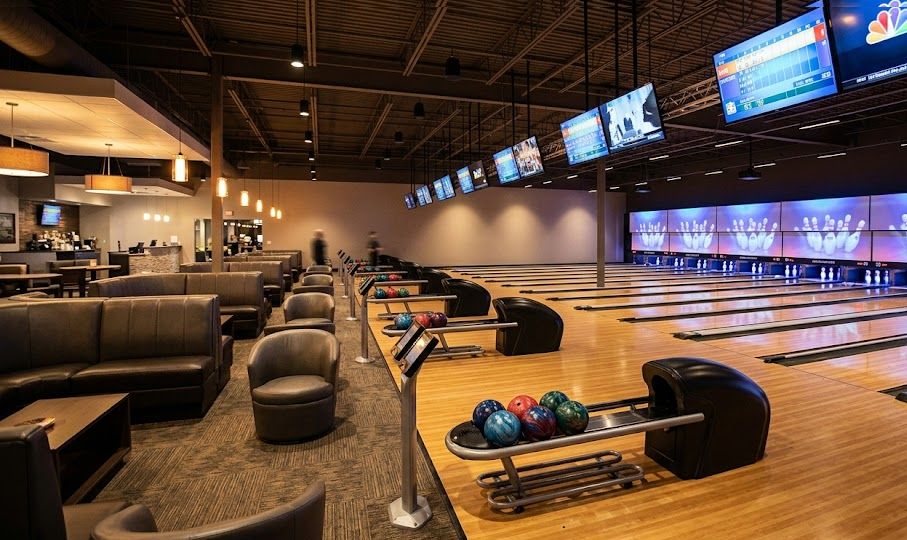
Opening a bowling alley typically costs anywhere from $300,000 to more than $3 million, and the single biggest variable is whether you buy an existing center or build a new one. Purchasing an operating center commonly runs $300,000 to $1.5 million depending on size, condition, and cash flow. Building new costs far more, with lane equipment alone running $40,000 to $90,000 per lane installed, which puts a ground-up 12-lane center in the $1 million to $3 million range once the building, bar, and kitchen are counted. Here is where the money goes on both paths.
Buy, Convert, or Build
Bowling alley startup costs split into three very different projects, and choosing among them is the first real decision:
| Path | Typical cost | What you get |
| Buy an existing center | $300,000 to $1.5 million | Lanes, equipment, staff, and revenue from day one, often with older machines |
| Convert existing space | $600,000 to $1.5 million+ | A boutique 6 to 10 lane concept in a retail or warehouse shell |
| Build ground-up | $1 million to $3 million+ | A new 12 to 24 lane center designed around food, bar, and events |
Buying is usually the cheapest entry, and the trade-off is inheriting equipment that may need six figures of refurbishment. The boutique conversion has become the popular middle path, pairing a smaller lane count with a strong bar and kitchen in a space that already exists.
What Lane Equipment Costs
A complete lane package includes the pinsetter, the lane surface, ball returns, scoring, and seating, and installed packages generally run $40,000 to $90,000 per lane. Pinsetter choice drives the spread. Traditional free-fall machines cost more to buy and maintain, while string pinsetters cost less on both counts, which is why most new boutique centers choose them. A meaningful used and refurbished market exists as centers close or upgrade, and refurbished packages can cut equipment costs significantly for owners willing to manage older machines.
The Building, the Bar, and the Kitchen
Bowling needs a big footprint. Even a boutique center wants 8,000 square feet or more, and traditional centers occupy 15,000 to 30,000. That makes the lease or purchase one of the largest line items, and it makes the food and beverage build-out the most important investment after the lanes, because modern centers earn much of their margin at the bar and kitchen rather than on lane fees.
The industry’s shape backs that up. The U.S. bowling centers industry generates $3.7 billion across 2,597 businesses, which works out to roughly $1.4 million in average revenue per center, with food, beverages, and non-bowling games counted alongside lane revenue and Bowlero the largest operator. The centers that thrive sell an evening out, with bowling as the anchor.
How Bowling Alleys Make Money
Open-play lane rates commonly run $25 to $50 per lane per hour, with shoe rental on top. Leagues provide the dependable base, filling weeknights on multi-month commitments, while birthday parties, corporate events, and weekend prime time carry the margin. A center that books its Friday and Saturday nights solid and keeps three weeknight leagues running has a very different year than one relying on walk-ins.
Leagues earn their reputation as the backbone. A single league of committed bowlers occupies lanes for thirty or more consecutive weeks, arrives on a schedule, and eats and drinks while playing, which turns one autumn signup sheet into a winter of predictable revenue. Behind the scenes, plan for at least one staff member who can maintain the machines, because a lane that breaks down on a Saturday night costs more in refunds and goodwill than a mechanic costs in a month.
Ready to get started?
Financing a Bowling Center
Lane packages, pinsetters, and kitchen equipment all qualify for equipment financing, with the equipment serving as its own collateral, and that applies to refurbished machines as well. Our guide to equipment financing for used equipment covers how lenders treat age and remaining useful life, which matters in an industry where pinsetters run for decades. For renovation and build-out phases, a short-term loan with a defined payoff matches a defined project. Consider a buyer acquiring an eight-lane center for $500,000 and budgeting $150,000 for machine refurbishment and a bar refresh: financing the equipment work while preserving cash for operations is usually the difference between a smooth first year and a strained one.
Apply for Bowling Alley Financing with Delta Capital Group
Delta Capital Group provides unsecured working capital from $5,000 to $5,000,000 to business owners across the country. No collateral required beyond the equipment for most equipment financing. Approvals happen in as little as 24 hours, and 95 percent of approved applicants are funded within 48 hours. Minimum qualifications are 6 months in business, $15,000 in monthly revenue, and a 500 credit score. Apply at deltacapitalgroup.com.
Get Your Free Quote
Frequently Asked Questions
How much does bowling alley equipment cost per lane?
Installed lane packages, including the pinsetter, lane surface, ball return, and scoring, generally run $40,000 to $90,000 per lane new. String pinsetters sit at the lower end and cost less to maintain, and refurbished packages can reduce the number further.
Can you open a small bowling alley?
Yes, and boutique centers with 6 to 10 lanes are the fastest-growing format. Pairing a smaller lane count with a strong bar and kitchen lets the concept fit into existing retail or warehouse space at a fraction of a traditional center’s footprint.
Is it cheaper to buy an existing bowling alley or build one?
Buying is almost always cheaper. Operating centers commonly sell for $300,000 to $1.5 million with revenue in place, while ground-up construction starts around $1 million and climbs quickly. The trade-off is inheriting older equipment that may need refurbishment.
How much money does a bowling alley make?
Industry figures put average revenue near $1.4 million per center, though the range is wide. Centers with strong league bases, busy weekend event calendars, and real food and beverage programs sit well above centers relying on open play alone.
Can you finance a bowling alley?
Yes. Lane packages and kitchen equipment qualify for equipment financing with the equipment as collateral, refurbished machines included, and short-term loans commonly fund renovations. Buyers of existing centers often combine several funding sources matched to each part of the project.

