
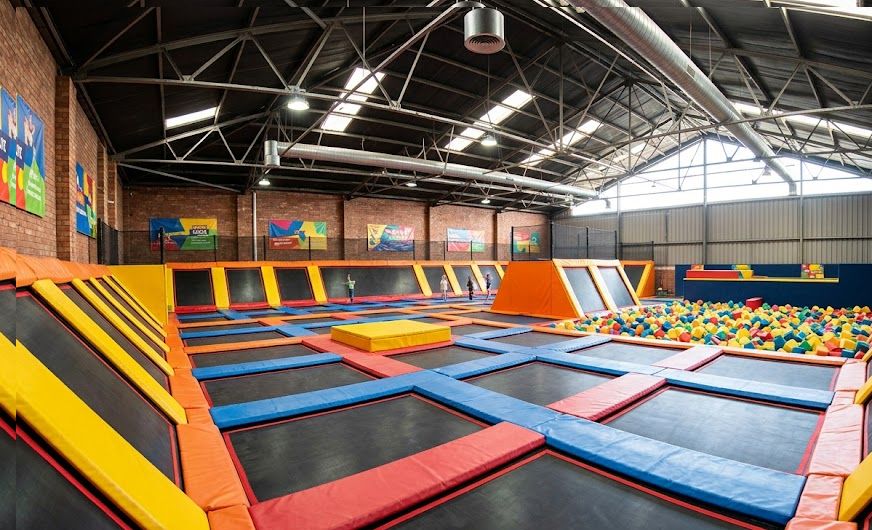
Opening a trampoline park typically costs between $250,000 and $1.5 million, with large franchise builds running past $3 million. A smaller independent park in a leased warehouse can open near the low end, a mid-size park with 20,000 square feet of attractions lands in the middle, and branded mega-parks with full attraction lineups sit at the top. The trampoline park startup cost formula is driven by three inputs: square footage of attractions, the building itself, and insurance, which plays a larger role in this business than in almost any other entertainment concept.
Court Equipment: The Per-Square-Foot Math
Trampoline courts are priced by area, and commercial court equipment generally runs $30 to $70 per square foot of attraction space, installed. The spread reflects complexity, since open jump courts sit at the low end while angled wall courts, foam pits, dodgeball courts, ninja courses, and climbing attractions cost more per foot. A park dedicating 12,000 square feet to attractions is therefore looking at roughly $360,000 to $840,000 in equipment before the building is touched, which is why attraction mix is the first budgeting decision. Many successful independents open with a focused lineup and add attractions from cash flow rather than building everything on day one.
The Building
Parks live in warehouse space because they need clear ceiling height, typically 17 feet or more above the courts so jumpers have safe headroom. Most operators lease rather than buy, targeting 15,000 to 30,000 square feet of industrial or big-box space, and the build-out covers HVAC capable of handling a building full of exercising customers, restrooms, a party room or two, a front desk, and flooring for the non-attraction areas. Build-out commonly adds $100,000 to $400,000 depending on the condition of the shell.
Insurance and Safety: The Line Item That Surprises Owners
Liability insurance is the cost that separates trampoline parks from other family entertainment. Premiums vary widely by state, attraction mix, and safety record, and they commonly reach tens of thousands of dollars per year, with insurers requiring signed waivers for every jumper, trained court monitors during all open hours, and documented padding and equipment inspections. Treat those requirements as operating design rather than paperwork. Parks that staff their courts properly and maintain equipment on schedule protect both their customers and their premiums, and owners should get real insurance quotes for their specific attraction plan before signing a lease, not after.
What Trampoline Parks Earn
Jump time is typically sold in hourly blocks at $15 to $25 per jumper, with grip socks, parties, memberships, and concessions layered on top. Birthday parties deserve special attention, since they book party rooms at premium package prices and fill weekend daytime hours.
The economics of the category are striking. The U.S. trampoline park industry generates about $750 million a year across fewer than 400 businesses, which works out to roughly $2 million in average revenue per park. Few small-business categories concentrate that much revenue per location, and it explains why the format attracted national franchises so quickly.
💡 Pro Tip
The smartest funding decisions come from understanding the full cost, not just the monthly amount. Visit our guides for more exclusive tips.
Independent or Franchise?
Franchise systems bring site selection help, attraction packages, and brand recognition, and their total investment requirements commonly run $1.5 million to $3 million or more. Independents can open smaller and cheaper, keep the royalties, and tailor the attraction mix to their market, in exchange for sourcing their own equipment vendors and building their own marketing. The insurance and safety requirements are identical either way, so the real difference is capital and control.
Financing a Trampoline Park
Court systems, foam pits, and attraction equipment qualify for equipment financing, with the installed equipment serving as collateral and terms spread over several years of its useful life. Build-out is the natural fit for a short-term loan, since the project has a defined cost and a defined end date. And because parks open with a ramp-up period while birthdays and memberships build, a business line of credit covering the first months of payroll and marketing keeps the opening from draining reserves. Imagine an independent opening a 15,000 square foot park at $850,000 all-in: financing $500,000 of court equipment, funding $200,000 of build-out on a short-term note, and holding the rest as working capital splits one intimidating number into three manageable ones.
Finance Your Trampoline Park with Delta Capital Group
Delta Capital Group provides unsecured working capital from $5,000 to $5,000,000 to business owners across the country. No collateral required beyond the equipment for most equipment financing. Approvals happen in as little as 24 hours, and 95 percent of approved applicants are funded within 48 hours. Minimum qualifications are 6 months in business, $15,000 in monthly revenue, and a 500 credit score. Apply at deltacapitalgroup.com.
Frequently Asked Questions
How much does trampoline park equipment cost per square foot?
Commercial court equipment generally runs $30 to $70 per square foot of attraction space installed. Open jump courts sit at the low end, while foam pits, angled walls, ninja courses, and specialty attractions push the number higher.
What ceiling height does a trampoline park need?
Plan on clear height of at least 17 feet above the courts, which is why parks operate in warehouse and industrial space. Ceiling clearance is one of the first things to verify before signing any lease.
How much is insurance for a trampoline park?
Liability premiums vary widely by state, attraction mix, and safety record, and they commonly reach tens of thousands of dollars per year. Get quotes for your specific attraction plan early, since insurance requirements shape staffing, waivers, and operations.
Are trampoline parks profitable?
The category averages roughly $2 million in revenue per park across fewer than 400 U.S. locations, and parks that fill weekends with parties and build weekday programs like toddler time and fitness classes convert that revenue into strong margins. Utilization and safety discipline decide the outcome.
Is it cheaper to open an independent park or a franchise?
Independent parks can open for $250,000 to $700,000 in a leased warehouse with a focused attraction lineup, while franchise builds commonly require $1.5 million to $3 million or more. Franchises trade higher cost for brand recognition and a proven playbook.

